Back to resources
Industrial Hygiene
Chemical Inventory
Safety Operations
Benzene Safety in 2026

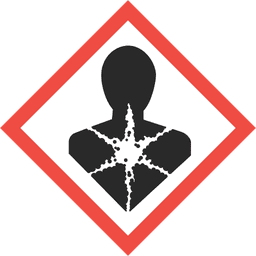

Understand the risks of benzene, it's exposure limits and recommended PPE in industrial workplaces.
-
8 min read

Industrial chemicals can vary in strength and concentration. Please read the Safety Data Sheet provided by your supplier for the most accurate information for you.
Benzene (chemical formula C6H6, CAS No. 71-43-2) is a simple aromatic hydrocarbon. NIOSH describes it as a colorless to light-yellow liquid with an aromatic odor, and its physical properties explain why it is treated as both a fire hazard and a health hazard. It has a boiling point of 176°F, a vapor pressure of 75 mmHg, a flash point of 12°F, a lower explosive limit of 1.2% and an upper explosive limit of 7.8%. In practical terms, benzene gives off flammable vapour at ordinary room temperatures.
Benzene occurs naturally in crude oil, natural gas and some ground waters, and it is also formed when organic material burns incompletely. The UK Health and Safety Executive (HSE) notes that most people can just detect its smell at concentrations between 2.5 and 5 ppm in air. That is above the legal limits in all three countries covered here, so odour cannot be relied on as a warning. Benzene is classified by the International Agency for Research on Cancer (IARC) as a Group 1 agent, meaning it is carcinogenic to humans.
Common Industrial Uses of Benzene
Today benzene is used mainly as a building block for other chemicals rather than as a solvent. According to the U.S. Agency for Toxic Substances and Disease Registry (ATSDR), ethylbenzene accounted for 52% of benzene production volume in 2008 and is an intermediate in the synthesis of styrene, which is used to make plastics and elastomers. The second largest use is cumene, at 22%, which is used to produce phenol and acetone. Phenol in turn feeds phenolic resins and nylon intermediates, while acetone is used as a solvent and in pharmaceutical manufacture.
Other manufacturing uses follow in smaller proportions. Cyclohexane (15%) is used to make nylon resins, and other chemicals made from benzene include nitrobenzene (7%) for aniline production, linear alkylbenzenes for detergents (2%) and chlorobenzenes for engineering polymers (1%). Globally, IARC reports that the production of ethylbenzene, cumene, cyclohexane and nitrobenzene accounts for 90% of annual benzene consumption, and China, the USA and western Europe consume about half of all benzene produced.
Solvent use has fallen sharply. HSE states that benzene was formerly used as a solvent, but in most cases safer substances have now replaced this use. Even so, exposure still occurs in manufacturing processes where benzene is an impurity or a by-product. For example, the U.S. National Toxicology Program reports that in the vulcanization step of tire manufacturing, benzene was measured at concentrations of up to 27.2 mg/m³. HSE lists the typical settings for workplace exposure in Britain as oil refineries; chemical and petrochemical plants, including some offshore installations; coke works; foundries during casting where benzene sulphonic catalysts are used; and the storage, distribution and use of petrol or benzene itself.
How Common is Benzene in the Workplace?
Most countries have not surveyed benzene exposure among workers for decades, so it is difficult to say with confidence how many people are exposed today. A more practical measure is the number of workplaces where benzene is present, because regulators and industry bodies already track the relevant facility types. For this article, those workplaces are divided into two groups. The first is sites that produce or process benzene. The second is the much larger set of sites where benzene arrives as a component of fuel or vehicle exhaust. This grouping is not an official classification. It broadly mirrors the scope of OSHA's benzene standard, which excludes gasoline and other motor fuels after they leave bulk terminals.
Benzene production and processing workplaces
This group covers refineries, petrochemical plants, coke works and other sites where benzene is a raw material or is formed during processing. It is the most important group from a safety standpoint, because this is where the highest exposures occur and where benzene-specific regulations apply in full. The United States is the only country of the three with an official count. In its 2025 rulemaking, OSHA estimated that 12,270 establishments are affected by its benzene standard.
Fuel and Exhaust Workplaces
This far larger group includes fuel stations, vehicle repair shops, fire services and other workplaces where benzene is present in petrol or exhaust rather than handled as a chemical in its own right. Fuel stations are the best counted. There are approximately 150,000 fueling locations in the United States, Canada had 11,611 retail gasoline stations at the end of 2024, and the UK had 8,329 petrol stations operating as of November 2024. In Canada, automotive repair and maintenance is the industry with the greatest number of benzene-exposed workers, followed by public administration, which includes firefighters. The European CAREX study reached a similar conclusion, attributing its high count of exposed workers mainly to car repair, where skin contact with benzene-containing gasoline can occur. One industry data summary puts the number of U.S. automotive repair and maintenance establishments at 167,884.
The Health Effects of Benzene
Short Term (Acute) Effects
Inhalation is the main route of entry. ATSDR explains that when a person is exposed to high levels of benzene in air, about half of the benzene breathed in passes through the lining of the lungs into the bloodstream. The effects depend strongly on concentration. Brief exposure of 5 to 10 minutes to very high levels (10,000 to 20,000 ppm) can result in death, while lower levels (700 to 3,000 ppm) can cause drowsiness, dizziness, rapid heart rate, headaches, tremors, confusion and unconsciousness. In most cases these effects stop once the person is removed from exposure and breathes fresh air.
Long Term (Chronic) Effects
The main target of long-term exposure is the blood-forming system. ATSDR states that benzene causes harmful effects on the bone marrow and can cause a decrease in red blood cells leading to anemia; it can also cause excessive bleeding and affect the immune system, increasing the chance of infection.
Cancer is the most serious concern. IARC's most recent full evaluation (Monograph Volume 120) concluded that there is sufficient evidence in humans for the carcinogenicity of benzene, and benzene causes acute myeloid leukaemia in adults. The same review found that positive associations have been observed for non-Hodgkin lymphoma, chronic lymphoid leukaemia, multiple myeloma, chronic myeloid leukaemia, acute myeloid leukaemia in children, and cancer of the lung. The recent reduction in the ACGIH guideline value (discussed below) was, according to one consultancy review, prompted by newer human studies suggesting bone marrow toxicity at benzene exposures lower than previously considered relevant.
Exposure Limits for Benzene
United States
The legally enforceable limits are set by OSHA in 29 CFR 1910.1028. Employers must ensure no employee is exposed above 1 ppm as an 8-hour time-weighted average, and no employee may be exposed above 5 ppm averaged over any 15-minute period. The standard also sets an action level of 0.5 ppm calculated as an 8-hour time-weighted average, which triggers additional duties. Medical surveillance is required for workers who could be exposed at 0.5 ppm for 30 or more days per year, and for workers who could be exposed at or above the 1 ppm PEL or 5 ppm STEL for 10 or more days per year.
Two non-binding U.S. benchmarks are considerably lower. NIOSH's recommended exposure limit is a TWA of 0.1 ppm and a short-term limit of 1 ppm, and its immediately dangerous to life or health (IDLH) value is 500 ppm, based on acute inhalation toxicity data in humans. The American Conference of Governmental Industrial Hygienists (ACGIH) made a major change in 2024: in January 2024, the ACGIH reduced the TWA for benzene to 0.02 ppm and eliminated the STEL, and it also assigned a skin notation to benzene to identify skin absorption as an exposure route.
The OSHA standard is under active review. On July 1, 2025, OSHA published a proposal to revise the benzene standard to reduce compliance burdens, allow for more up-to-date technology and improve the comprehensibility of the respiratory protection requirements, and it reopened the record in July 2026 with written comments due on or before August 27, 2026. A legal commentary on the rulemaking reports that the pending proposal does not modify any exposure limits for benzene-exposed workers. A final rule had not been issued at the time of writing.
Canada
Occupational health and safety is regulated mainly by the provinces and territories, so limits vary. CCOHS advises that in many, but not all, Canadian jurisdictions the exposure limits are similar to the ACGIH TLVs, and employers should contact their local jurisdiction for exact details. As an example, in Ontario, benzene is one of eleven designated substances under O. Reg. 490/09, and the province lists it at 0.5 ppm TWA and 2.5 ppm STEL, with a skin notation. The regulation was amended by O. Reg. 114/26, filed April 20, 2026.
United Kingdom
In the United Kingdom, the legally binding limit is the Workplace Exposure Limit (WEL) in HSE's EH40/2005, which lists benzene at 1 ppm and 3.25 mg/m³ as an 8-hour TWA, with no short-term limit, and with Carc(inogenic) and Sk(in) notations. Under COSHH, where substances have been classified as carcinogens, mutagens or asthmagens, exposure must be controlled to as low as is reasonably practicable.
British limits have now diverged from EU limits. Under the amended EU Carcinogens and Mutagens Directive, the existing OEL of 1 ppm was lowered to 0.5 ppm from 5 April 2024 and to 0.2 ppm from 5 April 2026. That change does not apply in Great Britain. HSE says it has considered the evidence on all outstanding EU limits and will introduce a revised limit for 3 of them, which are specific to underground mining and tunnelling, so the GB benzene WEL remains 1 ppm.
Recommended PPE for Benzene Handling
As far as best practice goes, PPE is expected to be the last line of defence after elimination, substitution and engineering controls. CCOHS recommends stringent control measures such as process enclosure, and backup controls such as double mechanical pump seals to prevent release due to equipment failure. Because benzene is highly flammable, it also advises non-sparking ventilation systems, approved explosion-proof equipment and intrinsically safe electrical systems. A few examples of country-specific regulatory guidance is given below:
United States
OSHA's benzene standard sets out specific respirator requirements. Employers must select respirators as specified in 29 CFR 1910.134, provide any organic vapor gas mask or any full-facepiece self-contained breathing apparatus for escape, and use organic vapor cartridges or canisters with powered and non-powered air-purifying respirators. In addition, any employee who cannot use a negative-pressure respirator must be allowed to use one with less breathing resistance, such as a powered air-purifying respirator or supplied-air respirator. OSHA interpretations explain the concentration ceilings for common respirators: a half-mask negative-pressure respirator with air-purifying cartridges is allowed where airborne concentrations are 10 ppm or less, and a full facepiece respirator with organic vapor cartridges may be used up to 50 ppm.
For skin and eyes, OSHA requires that protective clothing and equipment be worn where appropriate to prevent eye contact and limit dermal exposure to liquid benzene, be provided at no cost to the employee, and that eye and face protection meet 29 CFR 1910.133. NIOSH's guidance is stricter because it treats benzene as a potential occupational carcinogen. It recommends that at concentrations above the NIOSH REL, only a full-facepiece self-contained breathing apparatus operated in pressure-demand or other positive-pressure mode be used, and it advises employers to prevent skin and eye contact, remove clothing when wet because of flammability, and provide eyewash and quick-drench facilities. Employers should watch for the final outcome of OSHA's pending rulemaking, which targets the respiratory protection provisions.
Canada
Respirator requirements are set provincially, but most jurisdictions rely on NIOSH-approved equipment and the CSA standard for respirator programs. Ontario, for instance, defines qualitative and quantitative fit tests by reference to CSA Standard CAN/CSA-Z94.4-18, Selection, Use and Care of Respirators. Additionally, CCOHS provides practical PPE guidance for benzene like chemical safety goggles and a face shield when contact is possible. For skin, workers should wear chemical protective clothing rated for 8 hours of protection. Some Canadian institutions further advise that since nitrile is poor barrier against benzene, ordinary disposable nitrile gloves should not be relied on for direct contact.
United Kingdom
COSHH requires employers to select PPE through a risk assessment, and HSE's guide HSG53 is the main reference for choosing respiratory protective equipment (RPE). HSE's worker leaflet on benzene tells employees to use e`xtraction equipment and other controls correctly and use the protective clothing and equipment provided. Where RPE is needed, workers should make sure it fits properly; that they have been fit tested and are clean shaven if it is a tight-fitting mask; that it is clean and in good working order; that the filter is changed regularly; and that it is stored in a clean, dry place. In the British and European system, organic vapours are handled by Type A filters, colour coded brown, which cover organic gases and vapours with a boiling point above 65°C. Benzene's boiling point of about 80°C falls within that range. A university guide based on HSG53 gives protection factors for organic vapour filters of 10 times the WEL for a half-face respirator and 20 times the WEL for a full-face respirator. Fit testing should be done by a competent person, and HSE notes that competence can be demonstrated by accreditation under the Fit2Fit RPE Fit Test Providers Accreditation Scheme.
Health surveillance supports PPE in the UK. HSE says an occupational health professional will normally examine exposed workers at the start of employment and at regular intervals, and workers will be asked to provide a urine sample so its benzene content can be measured. Workers should also know that poisoning by benzene is a prescribed disease in the UK and may entitle them to Industrial Injuries Disablement Benefit.
Benzene remains one of the most closely regulated chemicals in industry, and for good reason. It is highly flammable, it is absorbed through both the lungs and the skin, and long-term exposure is linked to leukaemia and other blood disorders. The most effective protection still follows the hierarchy of controls: enclosed processes and ventilation first, supported by air monitoring, medical surveillance and properly selected PPE.
Good hazard communication underpins all of these measures. Workers can only protect themselves if they know where benzene is, what its hazards are and what to do when something goes wrong. Chemical safety software can help close that gap. sdsLite gives employees and first responders credential-free access to safety data sheets through a QR code or URL, which matters in an exposure incident where speed counts. Its Point of Use Libraries take this further by placing job-specific chemical safety information exactly where the work happens, such as a workstation, a fume hood or a solvent storage cabinet.